

Deposit for purchase agreement: advice for buyers when signing
23 June 2026
In a property purchase, before reaching the notarial signing there is an intermediate step that often raises many questions: the deposit for purchase agreement (known in Spain as contrato de arras).
Although it is a standard document in real estate transactions, not everyone is clear on exactly what signing it entails. In fact, many people wonder whether it is mandatory or what happens if the purchase ultimately does not go through.
The reality is that the deposit agreement plays a central role in the buying process. It does not simply reserve a property — it also establishes rights and obligations for both parties.
For this reason, before signing a contract deposit in real estate it is worth understanding what information the document must contain, what types of deposit agreements exist, and what the consequences of a potential breach are.
In this guide we explain everything you need to know to approach this step with confidence, whether you are looking to buy a home in one of Valencia’s finest neighbourhoods or considering selling your property.
What is a deposit for a purchase agreement and what is it for?
When buyer and seller reach an agreement on the price and conditions of a property, it is common for some time to pass before the final notarial signing.
During that period, various formalities may be required, such as applying for a mortgage, gathering documentation, cancelling outstanding charges, or coordinating the date of the deed.
The deposit for a purchase agreement exists precisely to ensure that both parties maintain their commitment during that period.
A purchase deposit agreement can be defined as a private contract whereby buyer and seller commit to completing the sale at a later date.
As a sign of that commitment, the buyer delivers a sum of money to the seller — typically equivalent to 10% of the sale price, although both parties may agree on a different amount.
This sum acts as a deposit demonstrating genuine intent to proceed with the transaction. At the same time, the seller commits to taking the property off the market and to not negotiating its sale with other interested parties while the agreement remains in force.
In practice, signing a deposit for a purchase agreement provides security for both parties. The buyer knows the property will be reserved for them, while the seller has assurance that there is a serious intention to purchase.
However, it is important to understand that this is not simply a reservation document. Signing a purchase deposit means taking on obligations that can have significant financial consequences if either party defaults.
For this reason, before signing it is advisable to carefully review all the property documentation and confirm that the agreed conditions accurately reflect what both parties have negotiated.
It is also worth clarifying a common doubt: signing a deposit for a purchase agreement is not mandatory to buy or sell a property. The transaction could be formalised directly before a notary.
However, given the complexity of most real estate transactions and the time that typically elapses before the public deed, the purchase deposit agreement has become a widely used tool for providing legal certainty throughout the process.
If you are weighing up your options, you may also find it useful to assess whether it is a good time to buy a property based on your financial situation and current market conditions.
Types of purchase deposit: a distinction that can change everything
One of the most important aspects before signing a purchase deposit agreement is understanding which type is being agreed upon. Many people focus on the amount of the deposit or the date of the deed but overlook this detail — when in reality it is one of the elements that can have the greatest consequences if problems arise.
In Spain there are three main types of deposit agreement, each with different legal effects.
Confirmatory deposit (Arras confirmatorias)
Confirmatory deposits act as an advance payment on the purchase price. The amount handed over by the buyer is subsequently deducted from the final price when the deed is signed.
Their main characteristic is that they serve as evidence of an agreement between the parties. However, they do not allow either party to withdraw freely from the transaction.
If the buyer or seller fails to fulfill their obligations, the other party may demand performance of the contract or claim compensation for losses suffered.
For this reason, confirmatory deposits tend to offer stronger protection against defaults, although they may also lead to more complex legal proceedings.
Penal deposit (Arras penales)
Penal deposits incorporate a financial penalty for the party that breaches the agreement.
In this case, the amount delivered functions as an additional guarantee of contract performance. If either party decides not to proceed with the transaction, they must accept the established penalty.
Furthermore, depending on how the document is drafted, the aggrieved party may seek both the agreed-upon compensation and the fulfillment of the contract.
Penitential deposit (Arras penitenciales)
Penitential deposits are the most common type in residential property transactions and the one most frequently used in private sales.
They are expressly regulated by Article 1454 of the Spanish Civil Code and allow either party to withdraw from the agreement without needing to justify their decision.
However, such withdrawal carries clearly defined financial consequences:
- If the buyer decides not to proceed, they will forfeit the deposit paid.
- If it is the seller who withdraws, they must return double the deposit received.
Precisely because of this clarity regarding the consequences of withdrawal, penitential deposits tend to provide greater security and predictability for both buyers and sellers.
What a deposit for purchase agreement must include
Although there is no single standard template, a well-drafted purchase deposit agreement should clearly set out all the relevant information about the transaction. The more detailed the document, the lower the risk of disputes or differing interpretations in the future.
One of the first aspects that must appear is the full identification of buyer and seller, including name, surnames, identity document number, and address.
Next, the document should include a detailed description of the property. Providing the address alone is not sufficient. It is also advisable to include the land registry details, the cadastral reference, and any elements attached to the property, such as parking spaces, storage rooms, or communal areas for private use.
Another essential point is the agreed purchase price. The contract must specify the total transaction amount, the deposit amount, and the payment method. This ensures there is no ambiguity about how the deposit will subsequently be deducted.
The scheduled date for signing the deed must also be clearly defined. One of the most common questions among buyers is how long it takes to sign a deposit for a purchase agreement and how much time then passes until the final sale.
Although there is no standard duration, the usual practice is to set a period long enough for the buyer to arrange their financing and for the seller to gather all the necessary documentation.
It is also advisable to expressly state the type of deposit being signed. As we have seen, the legal consequences differ significantly depending on whether the deposit is confirmatory, penal, or penitential.
Finally, it is recommended to include any circumstances that may affect the successful completion of the transaction. For example, whether the purchase is conditional on mortgage approval, whether there are outstanding charges to be cancelled, or whether certain works must be carried out before the final signing.
Before signing a purchase deposit agreement, it is also worth accurately calculating the taxes and costs associated with buying a property to avoid any surprises in the final budget.
What deposit is required on a personal contract purchase agreement
Although there is no legally fixed figure, the standard practice is to agree on a deposit equivalent to 10% of the property’s purchase price.
For example, for a property valued at 500,000 euros, the buyer would typically hand over 50,000 euros as a deposit. This amount will subsequently be deducted from the final price when the sale is completed before a notary.
However, that percentage is not mandatory. The parties may agree on a higher or lower amount depending on the circumstances of the transaction.
How long does it take to sign a deposit for a purchase agreement?
There is no standard timeframe for signing a purchase deposit. Everything depends on how the negotiation between buyer and seller evolves and on what documentation needs to be reviewed before formalising the agreement.
In many transactions, the deposit agreement is signed within a few days of reaching agreement on the price. In fact, when all the documentation is available and both parties are clear about their intention to proceed, the process can be completed in just a matter of days.
What tends to vary more is the period between signing the deposit agreement and the final notarial deed. It is common to set a period of between one and three months.
Advice before signing a deposit for purchase agreement
Before signing a purchase deposit, both buyer and seller should take the time to review the transaction in detail.
Advice for the buyer
The first step is to confirm that the property is in the expected legal situation. Requesting an up-to-date land registry extract allows you to verify the ownership of the property and identify any charges or restrictions.
It is also advisable to review the situation of the homeowners’ community, confirm there are no outstanding debts, and check that the registered information matches the physical reality of the property.
Another fundamental aspect is financing. Many buyers sign a deposit agreement before their mortgage has been formally approved. In these situations it is particularly important to include a clause making the purchase conditional on mortgage approval.
When the purchase is to be financed by a mortgage, a property valuation will be one of the necessary steps for the bank to assess the transaction.
Advice for the seller
It is advisable to verify that the deposit amount reflects the desired level of commitment and that the agreed timelines are realistic for completing the transaction.
If the property carries any outstanding charge, such as an existing mortgage, it must be clearly specified who will be responsible for its cancellation and when this will take place.
It is also recommended to have all the documentation required to sell a property ready before starting the process, as this streamlines both the signing of the deposit agreement and the subsequent sale.
What happens if my mortgage is denied after signing the deposit agreement
This is one of the situations that causes the most concern among buyers.
Many people find the property they wish to purchase and decide to sign a deposit for a purchase agreement before having a definitive mortgage approval in place. The problem arises when the bank ultimately rejects the financing.
Contrary to what some buyers believe, a simple mortgage denial does not automatically result in the return of the deposit.
If the contract does not expressly provide for this circumstance and pentiential deposits have been signed, the seller may be entitled to retain the deposit on the grounds that the buyer is unable to fulfill the purchase.
For this reason, when the transaction depends on bank financing, it is strongly advisable to include a suspensive clause or financing condition.
The importance of correctly drafting the deposit for purchase agreement
Although numerous templates for purchase deposit agreements exist, the truth is that every real estate transaction has its own particularities.
The timeframe for signing, the existence of financing, outstanding charges on the property, or the specific conditions agreed between buyer and seller may require tailored clauses that should be correctly reflected from the outset.
For this reason, many sales are formalised with the support of specialist real estate professionals. In addition to coordinating the negotiation, a real estate agency helps to gather the necessary documentation, verify the legal status of the property, and draft a contract adapted to the specific characteristics of the transaction.
At Monserrate Inmobiliaria we accompany buyers and sellers throughout the entire purchase process. Our team reviews each transaction individually to ensure that the deposit for purchase agreement clearly reflects the agreed conditions and provides security for both parties.
Contact us and we will help you complete your transaction with complete peace of mind and confidence.
Write to us, and one of our premium home agents will get in touch with you.
Other properties
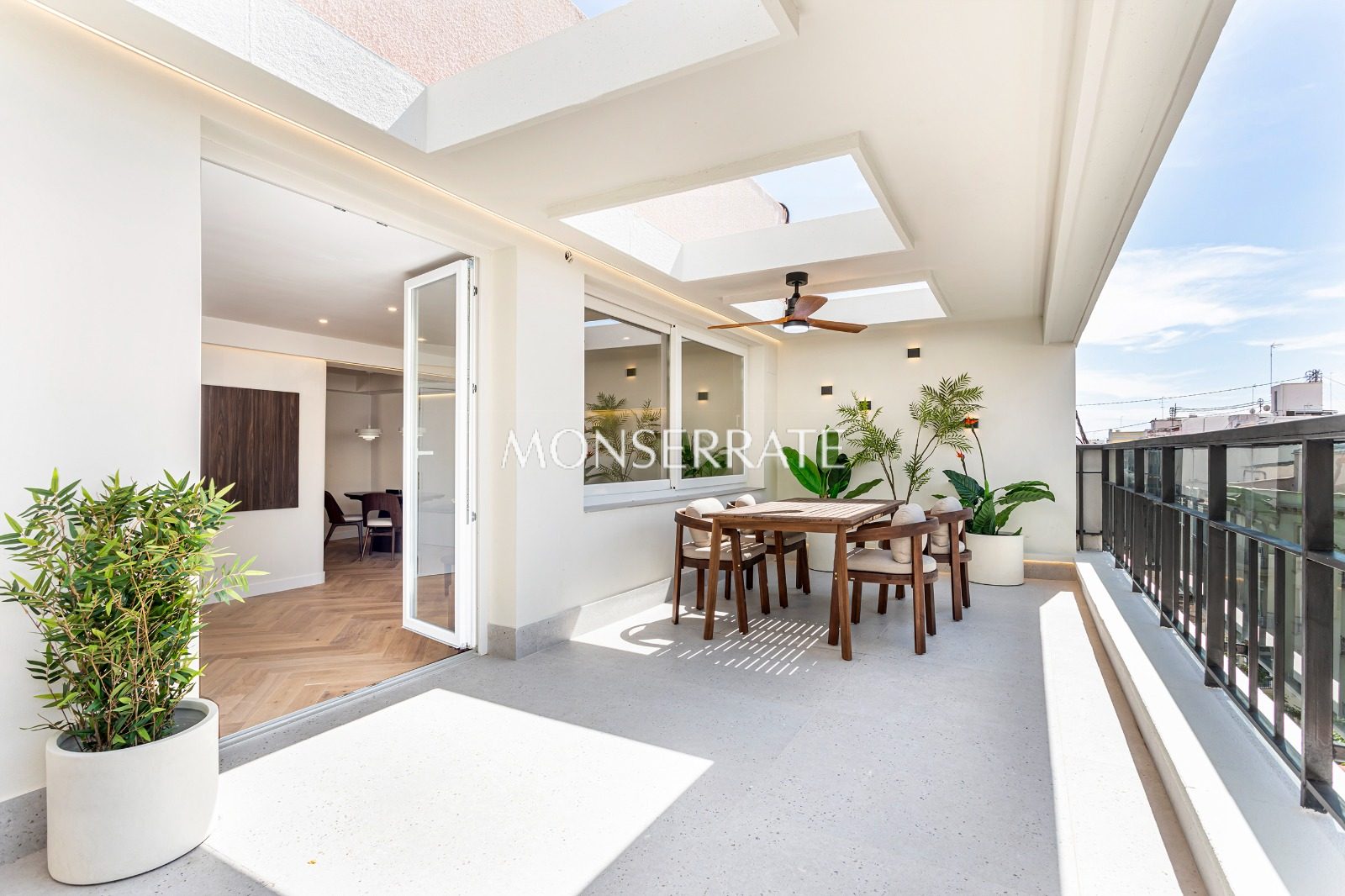
Buy
1.800.000€
An Exceptional Penthouse in the Heart of Pla del Remei

Valencia

V5362

196 sqm House

3

3

Buy
2.900.000€
Historic Residence Overlooking Alfonso el Magnánimo Square
Valencia
V5335
400 sqm House
5
4
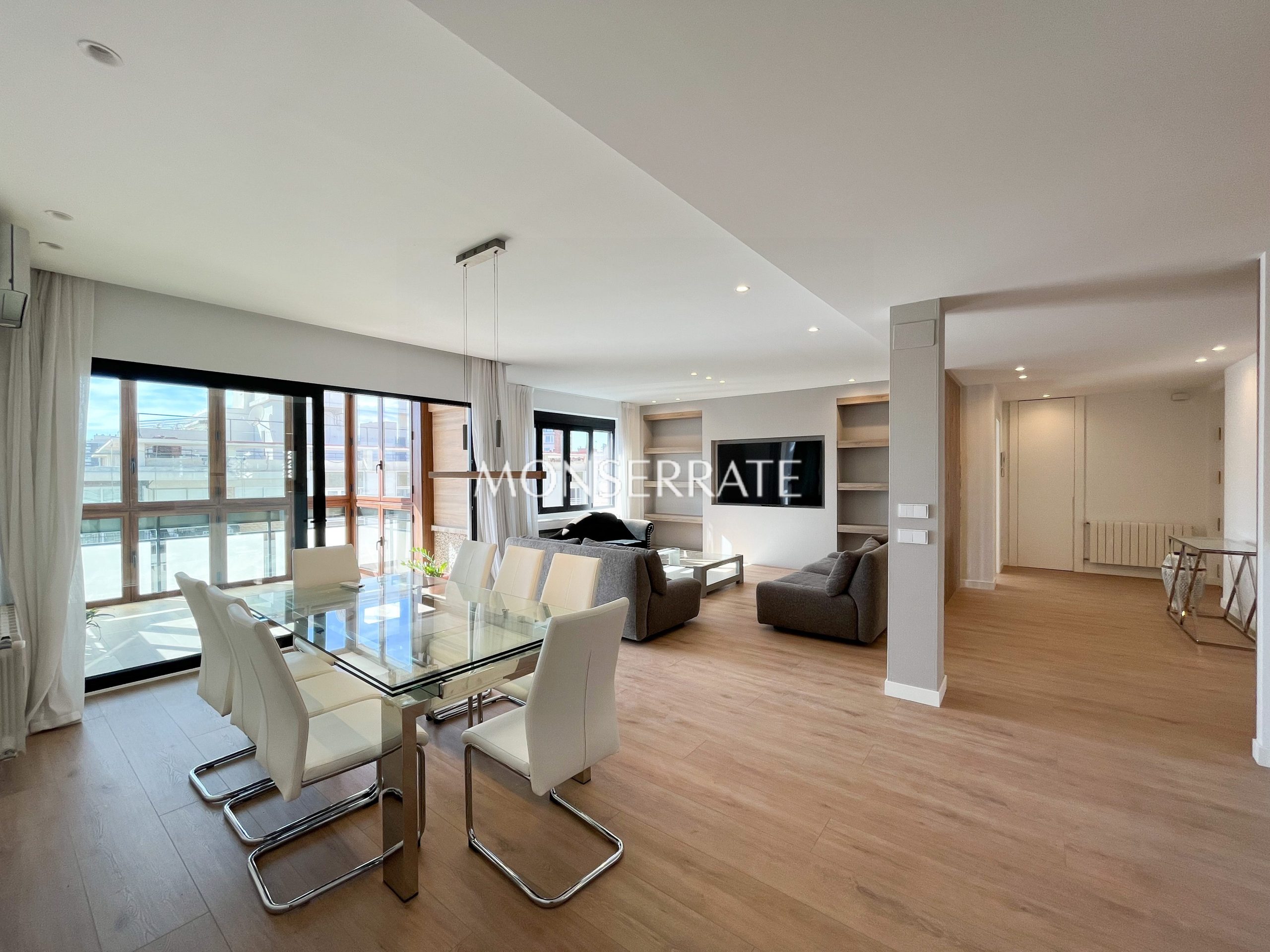
Rent
3.900€
Elegant and spacious renovated apartment in Jaime Roig, next to the German School
Valencia
A5282
240 sqm House
4
3

Buy
1.380.000€
High-end newly renovated property in Gran Vía
Valencia
V5328
168 sqm House
4
4
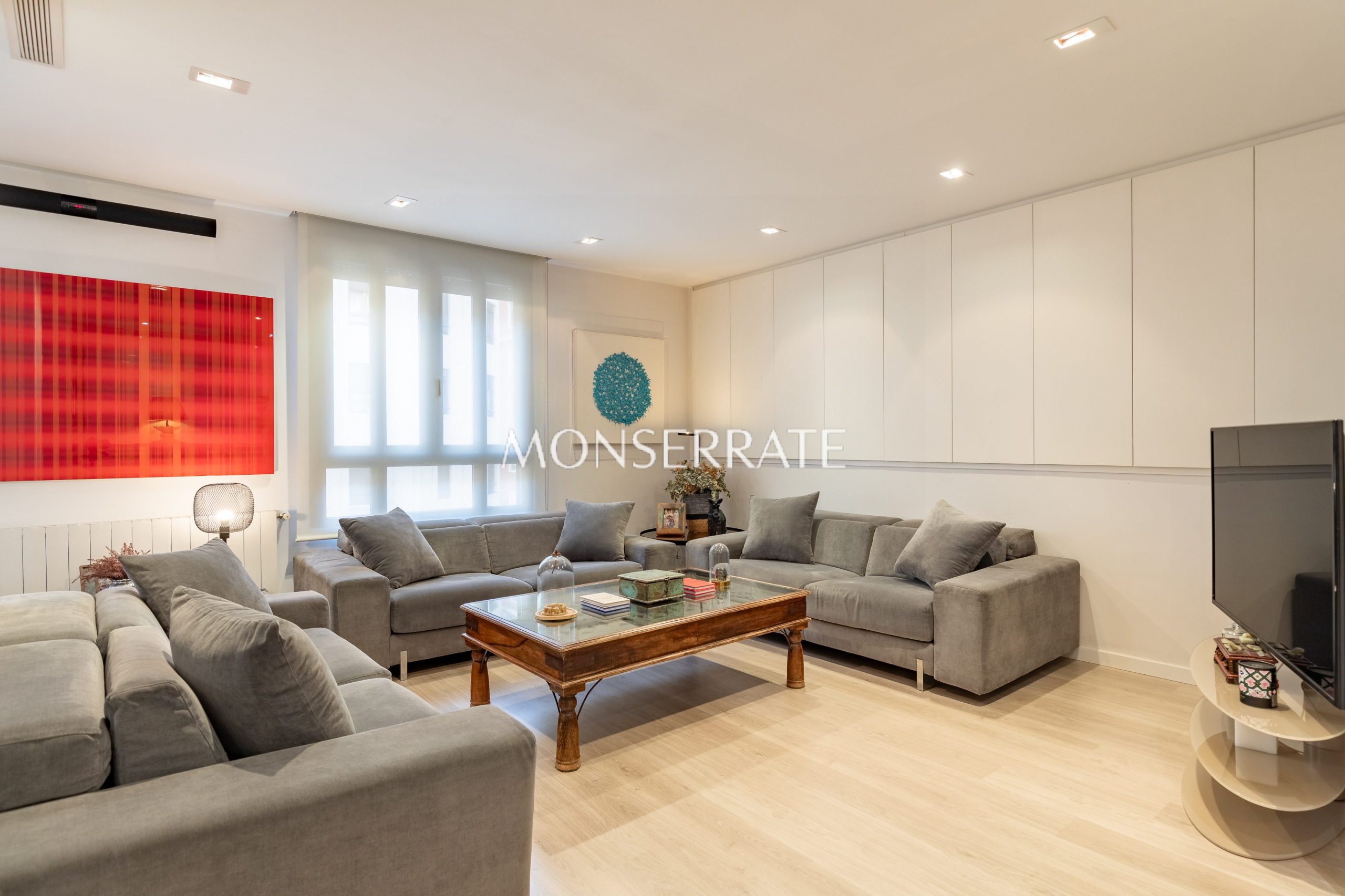
Rent
3.000€
Fabulous furnished property for rent next to the central market
Valencia
A5346
182 sqm House
4
3

Rent
12.000€
Exclusive contemporary chalet overlooking the golf course in Torre en Conill
Valencia
A744
510 sqm House
5
5
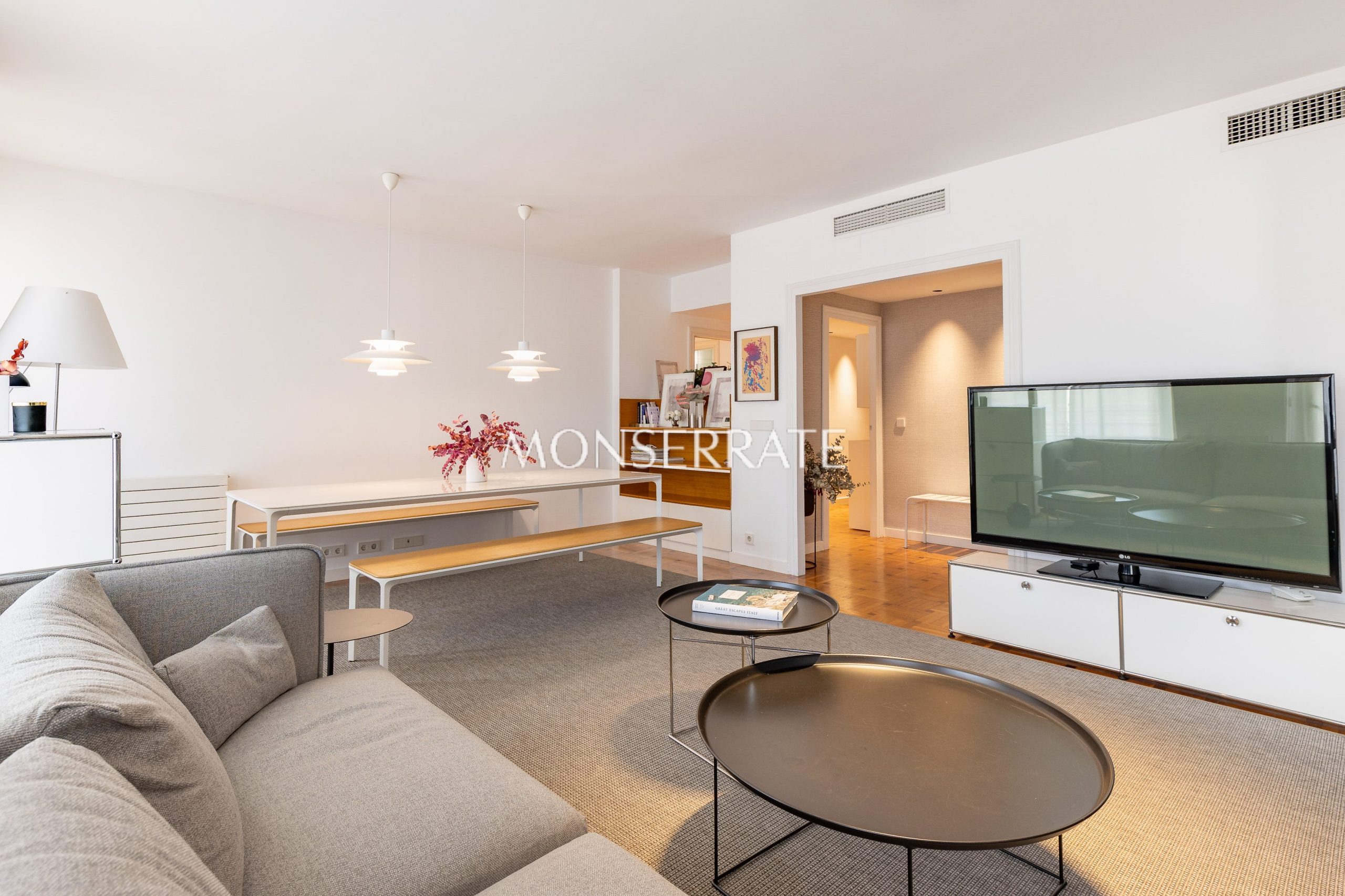
Buy
1.200.000€
Spacious Apartment with Terrace and Garage in Jaume Roig
Valencia
V5361
204 sqm House
4
3
Buy
895.000€
Great New Built Villa in Alfinach
Puzol / Puçol
V276
200 sqm House
4
3

Rent
2.900€
Exclusive Apartment at Monasterios Residences I
Sagunto / Sagunt
A137
145 sqm
2
2

Rent
3.300€
Spectacular designer home for rent in the heart of Valencia’s Ensanche district
Valencia
A5418
156 sqm House
3
2

Rent
3.600€
Exclusive Bungalow for Rent in Los Monasterios
Sagunto / Sagunt
A136
150 sqm House
3
4

Rent
3.600€
Magnificent Detached Villa with Private Pool in Alfinach
Valencia
A219
211 sqm House
4
3

Buy
1.970.000€
Luxury Villa with Spacious Garden and Swimming Pool in Campolivar
Godella
V798
530 sqm House
4
3

Buy
799.000€
Exclusive Designer Detached Home with Private Elevator
Valencia
V5350
394 sqm House
3
2

Buy
1.750.000€
Magnificent opportunity: luxury apartment for renovation in Plaza Legión Española
Valencia
V5352
300 sqm House
5
4

Rent
2.800€
Luxury Penthouse with Two Terraces & Jacuzzi
El Puig
A5407
192 sqm House
3
2

Buy
2.500.000€
Outstanding Luxurious Villa with Spa in Los Monasterios
Puzol / Puçol
V169
840 sqm House
8
7

Buy
2.625.000€
Exclusive Luxury Villa Under Construction in Torre en Conill
Bétera
V908
422 sqm
6
5

Buy
1.400.000€
Luxury home for Sale in Los Monasterios
Puzol / Puçol
VA117
468 sqm House
5
4

Buy
1.430.000€
Exceptional Renovated Residence in La Xerea
Valencia
V5347
211 sqm House
3
3

Buy
1.375.000€
Designer Apartment with Terrace in Mestalla
Valencia
V5331
229 sqm House
3
2

Buy
4.750.000€
Exclusive Luxury Estate in Vall d'Albaida
Fontanares
F112
750 sqm
9
6

Buy
6.600.000€
Outstanding private estate located between Valencia and Madrid
Garaballa, Cuenca
F108
1.200 sqm
9
10

Buy
580.000€
Country Estate on a 37,000 m² Estate in Fontanars dels Alforins, Ontinyent
Fontanares
F114
129 sqm
2
2

Buy
880.000€
Luxury Detached Villa with Pool and Garden in Alfinach
Puzol / Puçol
V275
269 sqm House
3
2

Rent
3.900€
Fantastic penthouse for rent with fabulous views.
Valencia
A5344
155 sqm House
2
2

Rent
3.500€
Elegant furnished property in Plaza Tetuan
Valencia
A506
178 sqm House
4
3

Buy
2.375.000€
Distinguished Duplex Penthouse in Landmark Modernist Building
Valencia
V5342
457 sqm House
5
5

Buy
780.000€
New Build Apartment in El Botánico
Valencia
ON506
144 sqm
3
2

Buy
525.000€
Wonderful Beachfront Apartment in Playa del Puig
Valencia
V5358
97 sqm
3
2
Artículos Relacionados

How to Buy a Luxury Property in Spain and Ensure a Profitable Investment
June 30, 2026
Leer más

Taxes for Non-Residents on the Sale of a Property in Spain: Everything You Need to Know
June 26, 2026
Leer más

Buying a second home in Spain as a non-resident: steps, taxes and requirements
August 31, 2026
Leer más

Valencia for Luxury Digital Nomads: Why International Professionals Choose This City
August 28, 2026
Leer más

Alfinach: Luxury that doesn’t need to announce itself
September 15, 2026
Leer más

Where to live near the British School of Valencia: the best areas and luxury properties
August 31, 2026
Leer más

What is the best orientation for a house? A guide for prospective buyers
July 1, 2026
Leer más

Pla del Real, Valencia: the neighbourhood where people who choose well end up living
August 31, 2026
Leer más

Living in Ruzafa: Art, gastronomy and a cosmopolitan vibe in Valencia’s coolest neighbourhood
September 15, 2026
Leer más

